
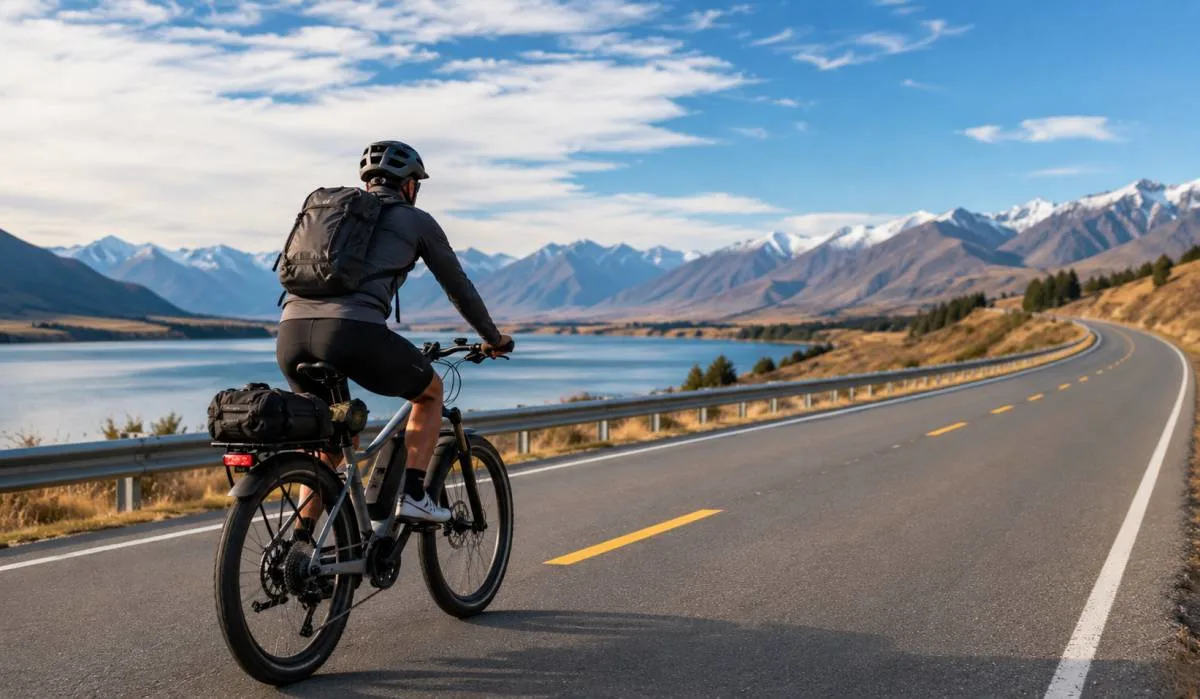
You are on a long ride. The battery is almost empty. There is no wall outlet anywhere. You start to worry. How do you keep going? Knowing how to charge an e-bike while travelling is a skill every rider needs. You cannot always find a plug.
But there are ways around it. Public stations are growing. Portable power stations work well for camping. Solar panels can help in remote spots. Even your car can give you a boost. This guide covers the practical options. No theory. Just real solutions that work when you are away from home. Let us get into it.
The Easy Way: Public Charging Stations
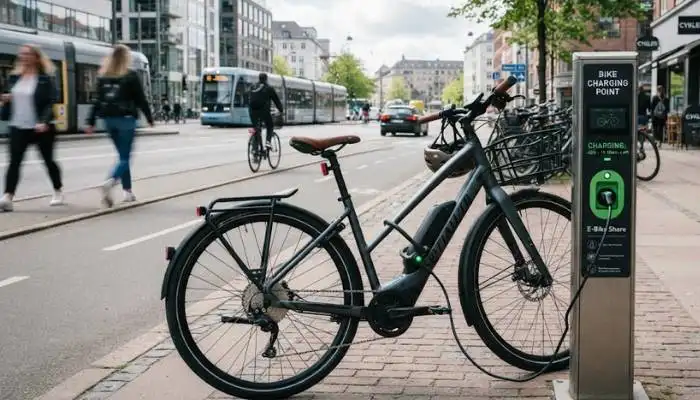
The simplest way to charge while travelling is to find a public e-bike charging station. These are becoming more common in cities and along popular routes .
How to find them:
Download an app like E-Station or eBike Charging. These apps show you charging stations near your location using data from OpenStreetMap. You can see what type of plug each station has before you go there .
In India, the government is building more charging infrastructure. As of August 2025, there are over 29,277 public charging stations across the country. The PM E-DRIVE scheme targets 22,100 new chargers by March 2026 .
What to know about public stations:
- AC Level 1 (3.3 kW): Takes 12-15 hours. Costs about ₹0.8-1.0 per km. Best for overnight charging .
- AC Level 2 (7.4-22 kW): Takes 2-8 hours. Costs about ₹1.5-2.0 per km. Found at workplaces and malls .
- DC Fast Charging (25-60 kW+): Takes 60-90 minutes to charge 10-80%. Costs about ₹2.5-3.5 per km. Found on highways and in urban hubs .
Cost tip: Charging during off-peak hours can cut your costs by up to 20%. Home charging is still the cheapest option .
Read More: Best Electric Bikes for Exercise: Top 5 Fitness E-Bikes
Off-Grid Options: When There Is No Outlet
If you are camping or travelling to remote areas, you need other solutions .
Portable Power Stations
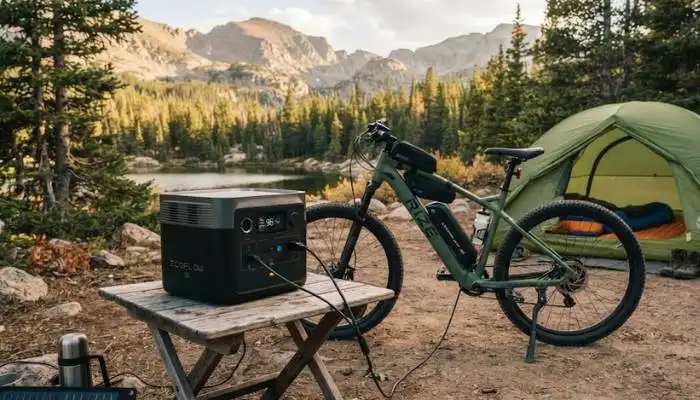
A portable power station is the simplest off-grid solution. You charge it at home before you leave. It stores power. Then you plug your e-bike charger into it just like a wall outlet .
How to choose one:
Check the capacity. An average e-bike battery has about 500 watt-hours (Wh). If your power station has 1,500 Wh, you can charge your e-bike about 2-3 times .
Real-world calculation:
- 1,500 Wh (power station) ÷ 500 Wh (battery) = 3 charges
- But charging has losses. Around 10-20% is lost through the inverter.
- 1,500 Wh × 0.8 = 1,200 Wh usable
- 1,200 Wh ÷ 500 Wh = about 2.4 charges
Pro tip: Charge your e-bike at night. Recharge the power station with solar panels during the day. This keeps you going on multi-day trips .
Solar Panels
Solar panels convert sunlight into power. You can pair them with a portable power station or charge your e-bike directly .
What you need:
- Solar panels (at least 100W recommended)
- A charge controller that matches your battery voltage
- Proper connection cables
What to expect:
On a clear day, you get 80-90% efficiency. On cloudy days, you get 30-40% .
A 100W panel can give you 300-500Wh per day in ideal conditions. That is enough to fully recharge a smaller e-bike battery .
Important note: Solar panels mounted on your bike while riding do not work well. Your body shades them. Road vibration shakes them. They only charge effectively when parked in full sun for hours .
Car Charging
If you are travelling by car, you can use your vehicle's 12V outlet .
How it works:
You need a travel charger that connects to your car's cigarette lighter. One end goes into the car. The other end connects to your e-bike battery .
Warning: Some e-bike batteries cannot handle car battery voltage directly. You may need a converter to match the voltage. Check your battery specifications first.
Using a Power Bank
A power bank can give you emergency power. You need one with DC output that matches your e-bike's voltage (typically 36V or 48V) .
What to expect:
Most portable power banks give you a 10-20% charge. That gives you about 2-8 miles of extra range. Look for power banks with at least 20,000mAh capacity. Larger 50,000mAh+ units work better for e-bikes .
Caution: Voltage compatibility is critical. An incompatible power bank can damage your battery system .
Spare Batteries
Carrying a fully charged spare battery sidesteps the charging problem entirely. At least until that one runs out too .
The downside:
Spare batteries are heavy and expensive. They work for day trips but do not solve the problem for multi-day adventures .
What About Charging While Riding?
For the vast majority of e-bikes, you cannot charge while riding. The electrical system is one-way. Power goes from the battery to the motor. Not the other way .
What about regenerative braking?
A small number of e-bikes have regenerative braking. This recovers a small amount of energy when you slow down .
How much does it help?
About 5-10% of the energy used during braking. Over a full ride with frequent stops and hills, this might extend your range by 5-10%. That is only an extra mile or two .
Which bikes have it?
Bafang (on certain direct-drive motors), parts of Bosch's Cargo Line, and some Riese & Müller systems. It is not standard on any mainstream commuter e-bike under about $2,500 .
The trade-off: Regenerative braking adds weight. It can create drag when freewheeling. On flat terrain, that drag may actually reduce your efficiency .
First Time Charging Your E-Bike Battery
If you just bought a new e-bike, the first charge matters.
The right way to do it:
- Use the charger made for that battery
- Charge it fully before your first ride
- Charge in a dry, indoor area
- Let the battery reach room temperature first if it is too hot or cold
- Unplug after charging is complete
What you do NOT need to do:
- Do not drain the battery first. Modern lithium-ion batteries do not need "activation."
- Do not leave it plugged in for an extra-long first charge .
Safety checks before charging:
- Make sure the charger and battery match. Do not assume a charger is safe just because the plug fits .
- Check the battery level before charging. If the battery shows very low charge and does not change, you will notice the problem early .
- Check that the charger, cable, and plug are not damaged .
- Do not charge a battery that may be damaged. Contact your dealer if you are unsure .
Safe charging location:
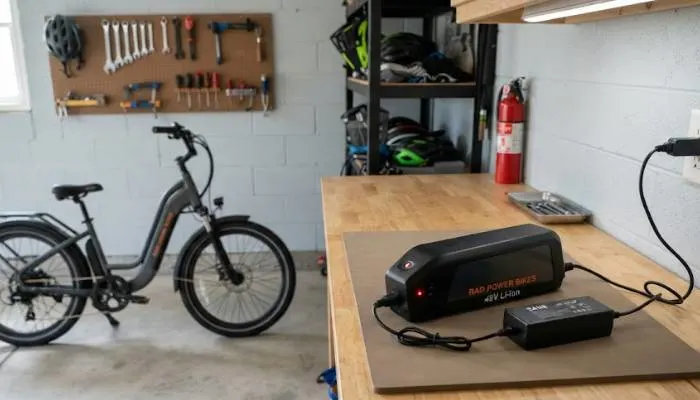
- Charge on a hard, stable surface. A concrete floor or solid bench works. Do not charge on a bed, couch, or thick carpet .
- Keep it away from heat, direct sunlight, paper, cardboard, curtains, or anything flammable .
- Keep the charger uncovered during charging .
Temperature limits:
Most e-bike batteries only charge between 32°F and 104°F (0°C to 40°C). If the battery is outside this range, the charging will not start. Let it warm up or cool down first .
You May Also Read: Best Electric Bike with Removable Battery - Top Picks 2026
Charging Without a Charger: Is It Possible?
The short answer: Not really, unless you know what you are doing.
The only way to charge an e-bike battery without its specific charger is to use a power supply that matches the battery voltage and current limits exactly .
What some people try:
- Using a variable power supply set to the correct voltage
- Wiring it directly to a car battery with the right converter
The risks:
- Wrong voltage can damage the battery permanently
- Overcharging can cause overheating and fire
- The battery management system (BMS) only accepts charge from a dedicated charger. Trying to force it in can damage the BMS
The bottom line: Unless you are experienced with electronics, do not try to charge your e-bike without the correct charger. You are better off carrying a portable power station or finding a public charging station.
FAQs
1. Can I charge my e-bike without the original charger?
No. The original charger is made for your battery. It gives the right voltage and current. Anything else can damage the battery or start a fire. Buy a replacement from the same brand if you lose yours.
2. Where do I find public charging stations?
Download apps like E-Station or eBike Charging. They show stations nearby. India has over 29,000 public stations now. You find them at malls, offices, and highways. Check the plug type before you go.
3. Can I use my car to charge my e-bike?
Yes, with the right travel charger. Plug into the car's 12V socket. Connect to your battery. Check your battery voltage first. Some need a converter to work with car power.
4. Will a power bank charge my e-bike?
Yes, but only a little. You need a power bank with DC output that matches your battery. Most give you 10-20% charge. That gets you 2-8 extra miles. Not a full charge. Good for emergencies only.
5. Can I charge my e-bike while riding?
No. Most e-bikes do not allow this. Power only goes from battery to motor. Some bikes have regenerative braking. It recovers a small amount when you slow down. Gives you about 5-10% more range. Not enough to count on.
