
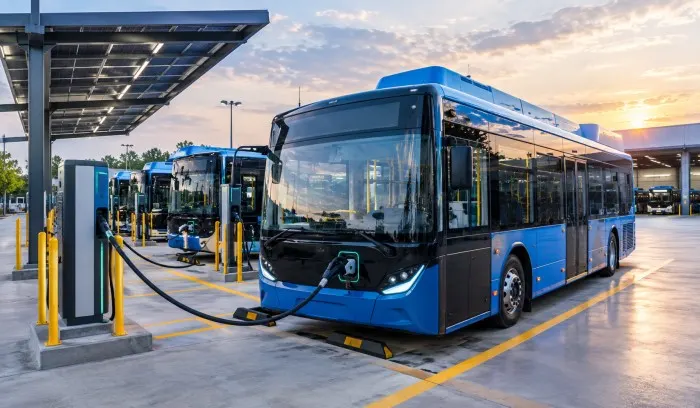
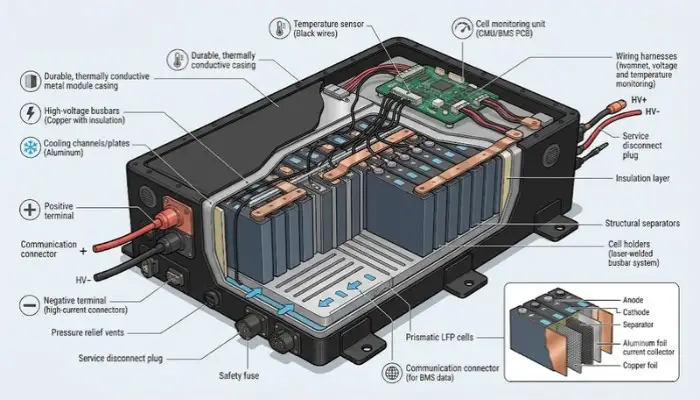
The battery accounts for the highest cost of an electric bus. It's also the criteria that determines the lifespan of the bus. Here are the two questions buyers ask. How long will it last? What is its fate after it dies? The answers are far better than you'd expect.
The electric bus battery life explained here comes down to a few hard facts. The typical life span of most packs is 8-10 years. Some new ones have offered up 15 years or 1.5 million kilometres. After 6 years a German fleet inspected theirs. Still near 90% capacity. The charging takes approximately 6 hours if you charge it at night. 60% of fast top-ups achieved in 12 minutes.
The replacement pack is between 25% and 30% of the price of the bus heat kills batteries. They wear due to fast charging. Attention to detail gives carefree fleets more years. The facts behind the numbers.
How Long Does an Electric Bus Battery Last?
The answer depends on the battery chemistry, the climate, and how you charge it.
- Standard lifespan: Most commercial vehicle batteries are guaranteed for 8 to 10 years or 500,000 to 800,000 kilometers . That is the baseline.
- Newer claims: CATL's Tianxing-B bus battery is rated for 15 years or 1.5 million kilometers. The warranty covers 10 years or 1 million kilometers . Yutong's EV Long-life Tech battery makes a similar claim: 15 years or 1.5 million kilometers with degradation below 30% .
- Real-world results: HEAG mobilo, a German transit operator, bought batteries in 2020 expecting 8 years of life at 80% capacity. After five years, the packs still held around 90%. Batteries bought in 2021 still had over 97% capacity after five years. The operator now thinks 10 years or longer is realistic .
- What affects lifespan: Temperature is the biggest factor. A lithium iron phosphate (LFP) battery reaches 80% capacity after 4,000 cycles at 25°C. At 45°C, that drops to just 2,000 cycles. For NMC batteries, the drop is even sharper: 1,200 cycles at 34°C, only 500 cycles at 46°C . High temperatures and fast charging speed up degradation .
- Chemistry matters: LFP batteries last longer than NMC. One study found LFP sustains 2.3 to 2.4 times the throughput-to-end-of-life of NMC, more than doubling expected battery lifetime . LFP is also cheaper and more thermally stable, which is why it dominates the bus market with a 57% share .
Read More: How Do Electric Buses Work? Battery, Charging, Motor and Range Explained
How Long Does an Electric Bus Take to Charge?
Charging time depends on the method and the battery size.
- Depot charging (overnight): The most common method. A bus plugs in at the depot and charges while the grid is quiet. This takes about 6 hours for a full charge. A fully charged bus can then drive 350 km to 400 km depending on weather and route .
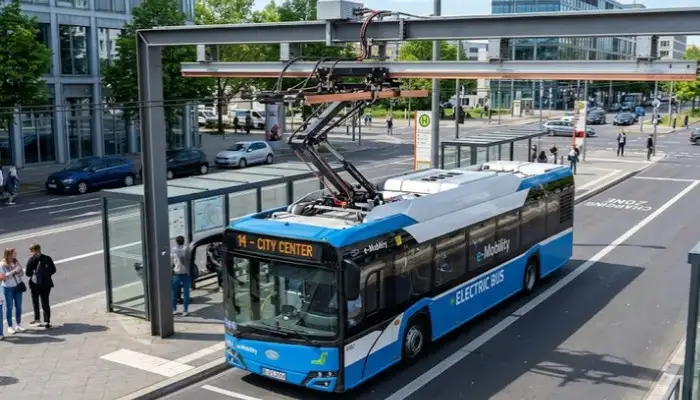
- Fast charging: CATL's Tianxing-B battery can reach 60% charge in just 12 minutes with super-fast charging . This is useful for opportunity charging at terminals or bus stops.
- The trade-off: Fast charging is convenient but can shorten battery life if used too often. Slow overnight charging is gentler on the cells. Operators balance the two based on route needs and battery health.
Electric Bus Battery Price
Battery replacement is expensive. In India, ICRA estimates that battery replacement can account for around 25% to 30% of an e-bus's total cost . For a 12-meter bus that costs roughly INR 10 million (about $120,000 USD), that means a replacement pack could run INR 2.5 million to 3 million (roughly $30,000 to $36,000 USD).
Real-world example: Kerala State Road Transport Corporation reported failed battery replacements costing about INR 2.8 million per bus .
- Why prices are falling: LFP battery pack prices dropped below $100 per kWh in 2024, driven by increased production capacity in China . That milestone makes electric buses more affordable and shortens the payback period. As pack costs continue to slide, replacement costs should come down too.
- Leasing as an option: Some operators separate battery ownership from the bus itself. A leasing model spreads the upfront cost over a longer period, guarantees battery performance, and shifts the replacement risk to the manufacturer or a specialist provider . This can make financial planning easier for transit agencies.
You May Also Read: Bus Travel Guide: Best Seats, Rules, Booking and Comfort Tips
What Shortens Battery Life?
Three things do the most damage:
- Heat. Temperatures above 35°C accelerate capacity fade and increase internal resistance . Buses operating in hot climates need thermal management systems to keep the pack cool.
- Fast charging. High C-rate charging speeds up degradation. Use it when you need it, not as your default .
- Deep discharges. Running the battery to near empty stresses the cells. Engineers often design bus systems to operate between 95% state of charge and 80% depth of discharge, leaving a buffer for regenerative braking and reducing wear .
- Good news: With proper thermal management, smart charging schedules, and predictive maintenance, batteries are lasting longer than early projections. The German operator that expected 8 years is now looking at 10 years or more . As chemistry improves and costs fall, the economics of electric buses keep getting better.
The Bottom Line
Electric bus battery life is improving fast. Standard packs last 8 to 10 years. Newer LFP and long-life designs claim 15 years or 1.5 million kilometers. Real-world data shows batteries holding up better than expected in well-managed fleets.
Charging takes about 6 hours overnight for a full pack. Fast charging can hit 60% in 12 minutes but should be used sparingly. Replacement costs are significant—25% to 30% of the bus cost in India—but falling pack prices and leasing models are making them easier to manage.
The battery is no longer the weak link. With the right chemistry and care, it can outlast the bus itself.
FAQs
1. How long does the battery last?
Most packs go 8 to 10 years. Or 500,000 to 800,000 km. Newer CATL and Yutong packs claim 15 years or 1.5 million km. One German fleet checked after six years. Still near 90% capacity.
2. How long to charge?
Six hours overnight for a full pack. That gives 350 to 400 km. Fast charging is quicker. CATL's newest battery hits 60% in 12 minutes. Do not rely on fast charging daily. It wears cells out sooner.
3. What does a new pack cost?
In India, about 25% to 30% of the bus price. A 12-metre bus costs roughly INR 1 crore. So a pack runs INR 25 to 30 lakh. Kerala SRTC paid about INR 28 lakh per bus. Prices keep dropping.
4. What ruins a battery fastest?
Heat. A pack at 25°C manages 4,000 cycles. At 45°C, only 2,000. Fast charging speeds up wear. Emptying it fully also hurts. Good cooling and smart charging make a big difference.
5. LFP or NMC? Which lasts?
LFP. It lasts 2.3 to 2.4 times longer than NMC. Cheaper too. Handles heat better. That is why 57% of the bus market uses it. Most new electric buses run LFP cells.
6. Can I lease the battery?
Yes. Some operators lease instead of buy. Spreads the cost over years. Shifts replacement risk to the supplier. Easier on the budget for transit agencies.
7. Why are packs outlasting estimates?
Better cooling. Smarter charging. Predictive maintenance. Fleets that watch temperature and avoid constant fast charging see packs hold up well. That German operator expected 8 years. Now plans for 10 or more.
8. Will prices keep falling?
Yes. LFP packs dropped below $100 per kWh in 2024. Chinese production keeps growing. Cheaper packs mean lower bus prices. Lower replacement costs too. Payback keeps getting shorter.
