
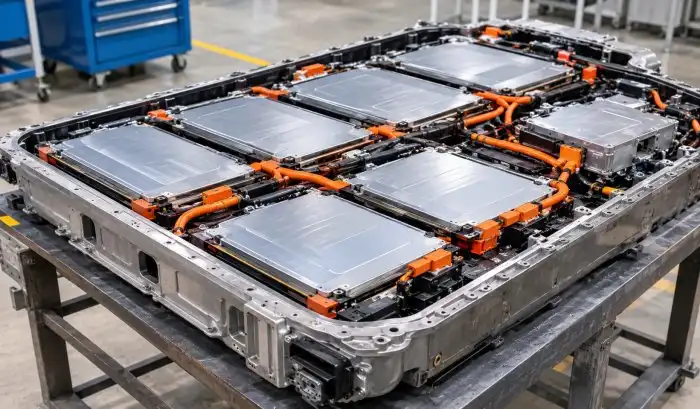
An electric bus battery does not die when it leaves the bus. It still holds valuable metal. Lithium, nickel, cobalt, copper, aluminium. All of it can be recovered. So how are electric bus batteries recycled? The process starts with draining the pack for safety. Then workers or machines take it apart.
The modules go into a shredder. Out comes a black powder full of metals. Acid dissolves that powder. The metals get separated and purified. Modern plants recover over 95% of the key metals. Those metals go back into new batteries. Nothing is wasted. This guide walks you through each step real details no vague claims.
Why Electric Bus Batteries Need Recycling?
Electric bus batteries are huge. A single bus pack can weigh more than 2,000 kilograms. Inside are lithium, nickel, cobalt, manganese, copper, and aluminum. These metals are expensive to mine and limited in supply. Dumping them in a landfill wastes money and creates pollution.
Electric car battery disposal pollution is a real concern. If a battery breaks or catches fire in a landfill, it can release toxic chemicals into the soil and water. Recycling keeps those materials out of the ground and puts them back into use.
There is also a legal push. The European Union now requires battery producers to collect and recycle EV batteries. Similar rules are coming in India, the US, and China.
Read More: Electric Bus Battery Life Explained: Lifespan, Cost and Charging
Step 1: Pickup and Transport
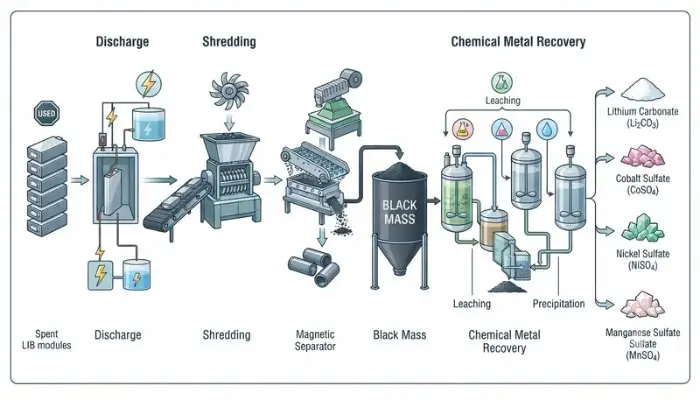
A dead bus battery still holds charge. A short circuit could spark a fire. So it travels in a fireproof, shock-absorbing container. Workers drain it to a safe level before it moves.
Bus makers or specialist recycling firms handle this pickup. You do not toss it in the back of a truck.
Step 2: Drain and Strip Down
- At the plant, the first job is safety. The battery gets fully discharged. No sparks. No shocks.
- Then it gets opened. Workers or robots pull off the casing, cooling lines, wiring, and electronics. What remains are the battery modules.
- Each module holds many cells. The cells are where the lithium and other metals live.
- Some plants do this by hand. Others use machines. Machines are safer and quicker. They also cost more to install.
Step 3: Shred It
The modules go into a shredder. It chews them into small bits.
What comes out:
- Black mass – powder full of lithium, nickel, cobalt, and manganese. This is the money part.
- Copper and aluminum – from the casings and collectors.
- Plastic and junk – separated and sent elsewhere.
The black mass moves to the next stage. The copper and aluminum get sold to metal dealers.
Step 4: Pull the Metals Apart
This is the chemical stage. The black mass gets dissolved in acid. The metals turn into liquid. Then each one gets pulled out separately.
Out comes high-purity lithium, nickel, cobalt, and manganese. These go straight back into new battery production.
- Battery recycling efficiency is strong here. Modern plants recover over 95% of the lithium, nickel, and cobalt. Some claim above 98%.
- Lithium battery recycling efficiency depends on the method. Old heat-based plants recover less. Chemical plants cost more to build but recover far more.
Step 5: Use It Again Before Recycling
Not every battery goes straight to the shredder. Many still hold 70% to 80% of their original power. That is too weak for a bus. But it is fine for stationary storage. These packs store solar power or back up buildings. That adds five to ten years of life.
After that, they go to recycling. The metals come out. The cycle continues.
What Percentage of EV Batteries Are Recycled?
Hard to pin down. Most EV batteries are still on the road. The first big wave of electric cars only started selling around 2011. Many of those packs still work. So the number reaching recyclers is still small.
The EU reports that about 50% to 60% of EV batteries that reach end-of-life get collected and recycled. The rest sit in storage, get exported, or slip into informal channels.
By 2030, the volume will grow fast. Analysts expect recycling capacity to grow with it. Some predict over 90% of EV batteries will be recycled by then.
The tech exists. The plants are being built. The challenge is scale.
Why This Matters for the Planet?
Recycling an EV battery saves energy compared to mining new metals. Pulling one kilogram of lithium from a dead battery uses far less energy than digging it from ore. Same for nickel and cobalt.
Recycling also cuts the need for new mines. Mining uses water, creates waste, and scars land. Recycling keeps those costs down.
There is money in it too. Companies like Redwood Materials in the US and Northvolt in Europe are building big recycling plants. They see value in the metals. That profit motive drives better tech and higher efficiency.
You May Also Read: How Do Electric Buses Work? Battery, Charging, Motor and Range Explained
How Does This Compare to Gas Cars?
You might ask: what is the approximate energy conversion rate for ICE vehicles?
- A gas or diesel engine turns only about 20% to 30% of the fuel's energy into movement. The rest escapes as heat. Most of the energy in petrol goes out the exhaust or through the radiator.
- An electric motor turns about 80% to 90% of the battery's energy into movement. That is why EVs are more efficient. But it also means the battery is the most valuable part of the car. It is worth recycling.
- A gas car has no equivalent. When it dies, the engine is scrap. The fuel is gone. The battery is tiny and low-value. An EV battery is a store of valuable metals that can be recovered.
What About ICE Vehicles?
You might wonder how this compares to gas and diesel vehicles. What is the approximate energy conversion rate for ICE vehicles?
- An internal combustion engine (ICE) converts only about 20% to 30% of the energy in fuel into movement. The rest is lost as heat. Most of the energy in petrol or diesel goes out the exhaust pipe or through the radiator.
- An electric motor converts about 80% to 90% of the energy in the battery into movement. That is why EVs are more efficient. But that efficiency also means the battery is the most valuable part of the car. It is worth recycling.
- An ICE vehicle has no equivalent. When a gas car dies, the engine is scrap metal. The fuel is gone. The battery is small and low-value. An EV battery is a store of valuable materials that can be recovered.
The Bottom Line
Electric bus batteries get recycled through a clear path. Pickup. Drain. Strip. Shred. Chemical extraction. The result is high-purity metals that go back into new batteries.
Battery recycling efficiency is high. Modern plants recover over 95% of key metals. The percentage of EV batteries recycled is still growing as the first big wave reaches end-of-life.
The process helps the environment. It saves energy. It reduces mining. It keeps toxins out of landfills. And it improves every year.
The battery in an electric bus is not waste. It is a resource. Recycling keeps it that way.
FAQs
1. What happens to a dead bus battery?
It goes to a recycling plant. First it is drained so it cannot catch fire. Then it is taken apart. The cells are shredded into a powder called black mass. That powder holds lithium, nickel, cobalt and manganese, Acid separates the metals over 95% of the key metals are recovered.
2. What percentage of EV batteries get recycled?
About half right now. The EU says 50% to 60% of batteries reaching end of life are collected. The rest sit in storage or get exported most EV batteries are still on the road by 2030, the rate should pass 90%.
3. Can an old bus battery be reused first?
Yes, Many still hold 70% to 80% of their capacity. Not enough for a bus but fine for storing solar power or backing up a building. It gets a second life for five to ten years then it goes to recycling.
4. How efficient is the recycling?
Modern plants recover more than 95% of lithium, nickel and cobalt. Some claim over 98% older plants that use high heat recover less. The chemical method costs more to build but gets far more out of the battery.
